
FAQ
Burning Questions?
We have answers (and preventative solutions)!
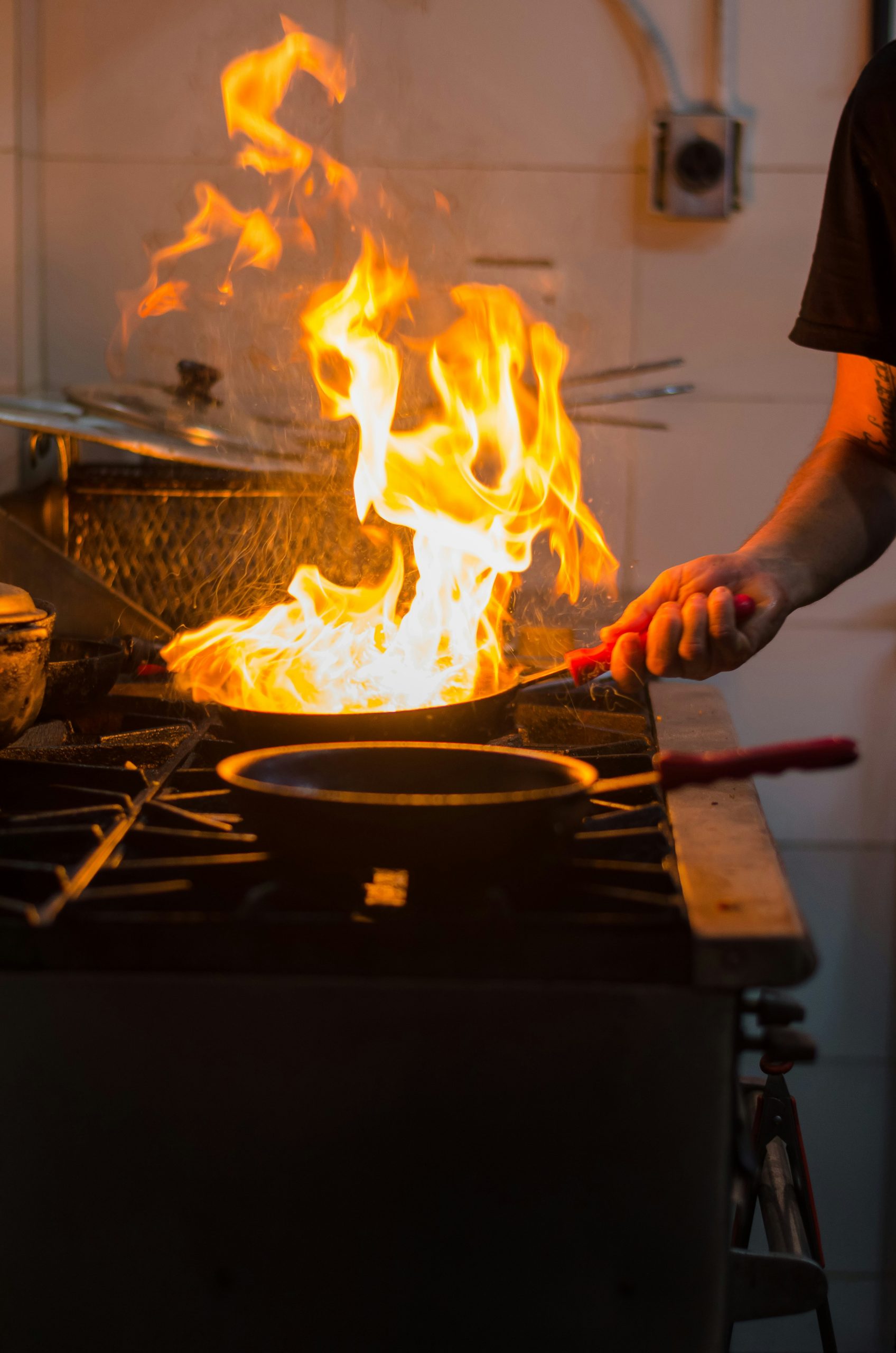
Regular cleaning of your commercial vent hood is essential for several reasons. It prevents dangerous grease fires by eliminating buildup that can ignite, ensures efficient ventilation to maintain good air quality, and helps avoid smoke and odors that could affect staff and customers. Additionally, it ensures compliance with health and safety regulations, extends the lifespan of your equipment, and meets insurance policy requirements to avoid potential claim issues.
The frequency of cleaning your commercial vent hood depends on several factors, including the type of food you prepare, the volume of cooking, and local regulations. Generally, the National Fire Protection Association (NFPA) recommends the following:
- High-volume kitchens (e.g., restaurants, fast food): Clean every 1-3 months.
- Moderate-volume kitchens (e.g., cafes, smaller restaurants): Clean every 3-6 months.
- Low-volume kitchens (e.g., offices, schools): Clean every 6-12 months.
The NFPA, or National Fire Protection Association, is a U.S.-based organization dedicated to reducing the risk of fire and related hazards through codes and standards, research, training, and education.
NFPA 96 is a specific standard developed by the NFPA that provides guidelines for the installation, maintenance, and inspection of commercial kitchen ventilation systems. Its primary focus is on fire safety, specifically to reduce the risk of grease fires and ensure the proper operation of ventilation systems. The standard covers aspects such as:
- Hood and duct construction: Requirements for materials and design to withstand high temperatures and minimize fire risk.
- Grease removal: Specifications for cleaning and maintenance to prevent grease buildup.
- Fire protection: Guidelines for installing and maintaining fire suppression systems within the kitchen hood.
Compliance with NFPA 96 helps ensure a safer cooking environment and adherence to fire safety regulations.
6.1 Grease Removal Devices
6.1.1 – Listed grease filters, listed baffles, or other listed grease removal devices for use with commercial cooking equipment shall be provided
6.1.2 – Listed grease filters and grease removal devices that are removable but not an integral component of a specific listed exhaust hood shall be listed in accordance with UL 1046
6.1.3 – Mesh filters shall not be used unless evaluated as an integral part of a listed exhaust hood or listed in conjunction with a primary filter in accordance with UL 1046
6.2.3.1 – Grease filters shall be listed and constructed of steel or listed equivalent material.
6.2.3.2 – Grease filters shall be of rigid construction that will not distort or crush under normal operation, handling, and cleaning conditions
6.2.3.3 – Grease filters shall be arranged so that all exhaust air passes through the grease filters.
6.2.3.4 – Grease filters shall be easily accessible and removable for cleaning.
6.2.3.5 – Grease filters shall be installed at an angle not less than 45 degrees from the horizontal
14.5.1 – Grease removal devices shall be constructed of steel or stainless steel or be approved for solid fuel cooking
14.5.2 – If airborne sparks and embers can be generated by the solid fuel cooking operation, spark arrestor devices shall be used prior to using the grease removal device to minimize the entrance of the sparks and embers into the grease removal device and into the hood and duct system.
14.5.3 – Filters shall be a minimum of 1.2 m (4 ft) above the appliance cooking surface
NFPA Guidelines for Fan Hinges:
Summary: Exhaust fans must have a hinge with a “hold open” retainer installed on them.
7.8.2 Rooftop Termination
7.8.2.1 Rooftop termination shall be arranged with or provided with the following:
(8) A hinged upblast fan supplied with flexible weatherproof electrical cable and service hold-open retainer to permit inspection and cleaning that is listed for commercial cooking equipment…
8.1 Exhaust Fans for Commercial Cooking Equipment
8.1.1.1 – Approved upblast fans with motors surrounded by the airstream shall be hinged, supplied with flexible weatherproof electrical cable and service hold-open retainers, and listed for this use
9.2.1 – Wiring systems of any type shall not be installed in ducts
NFPA Fire Codes for Rooftop Grease Containment:
Summary: Exhaust fans are required to have grease containment system installed on them.
7.8.2 Rooftop Terminations
7.8.2.1 Rooftop termination shall be arranged with or provided with the following:
(4) The ability to drain grease out of any traps or low points formed in the fan or duct near the termination of the system into a collection container that is noncombustible, closed, rainproof, and structurally sound for the service to which it is applied and that will not sustain combustion
(5) A grease collection device that is applied to exhaust systems that does not inhibit the performance of any fan
[6] Listed grease collection systems that meet the requirements of 7.8.2.1(4) and 7.8.2.1(5)
8.1 Exhaust Fans for Commercial Cooking Equipment
8.1.1.3 Upblast fans shall have a drain directed to a readily accessible and visible grease receptacle not to exceed 3.8 L (1 gal).
NFPA 96 Hood Cleaning Frequency:
Summary: You are required to have your exhaust system cleaned at the frequency shown below. If you have questions about which category your facility is in, contact your local fire inspector.
Type or Volume of Cooking | Inspection Frequency |
Systems serving solid fuel cooking operations | Monthly |
Systems serving high-volume cooking operations, such as 24-hour cooking, charbroiling, or wok cooking | Quarterly |
Systems serving low-volume cooking operations | Semiannually |
Systems serving low-volume cooking operations, such as churches, day camps, seasonal businesses, or senior lefts | Annually |
11.6.1 – Upon inspection, if the exhaust system is found to be contaminated with deposits from grease-laden vapors, the contaminated portions of the exhaust system shall be cleaned by a properly trained, qualified, and certified company or person(s) acceptable to the authority having jurisdiction.
11.6.2 – Hoods, grease removal devices, fans, ducts, and other appurtenances shall be cleaned to remove combustible contaminants prior to surfaces becoming heavily contaminated with grease or oily sludge.
NFPA Fire Codes for Duct Access & Access Panels:
Summary: Grease Duct Access Doors are required to be installed on every 12’ of grease duct.
4.1.8 – All interior surfaces of the exhaust system shall be accessible for cleaning and inspection purposes
5.1.2 – All seems, joints, and penetrations of the hood enclosure that direct and capture grease-laden vapors and exhaust gases shall have a liquid tight continuous external weld to the hood’s lower outermost perimeter
7.3.1 – Openings shall be provided at the sides or at the top of the duct, whichever is more accessible, and at a change of direction
7.4.1.1 – On horizontal ducts, at least one 508 mm x 508 mm (20 in. x 20 in.) opening shall be provided for personnel entry
7.4.1.2 – Where an opening of this size is not possible, openings large enough to permit thorough cleaning shall be provided at 3.7 m (12 ft) intervals
7.4.1.3 – If not easily accessible from a 3 m (10 ft) stepladder, openings on horizontal grease duct systems shall be provided with safe access and a work platform
7.4.2.2 – Where personnel entry is not possible, adequate access for cleaning shall be provided on each floor
7.5.2.1 – all seams, joints, penetrations, and duct-to-hood collar connections shall have a liquid tight continuous external weld.
NFPA Fire Codes for Fan Access Panel:
Summary: Exhaust fans must have an access panel installed so the fan blades can be inspected and cleaned.
8.1.5.3.1- Upblast fans shall be supplied with an access opening of a minimum 76 mm by 127 mm (3 in. by 5 in.) or a circular diameter of 101 mm (4 in.) on the curvature of the outer fan housing to allow for cleaning and inspection of the fan blades
8.1.5.3.2 – On existing upblast fans where sufficient access is not available to allow for the removal of grease contamination, an approved hinge mechanism or access panel shall be installed
What is NFPA 96?
Summary: The National Fire Protection Association (NFPA) standards are what local and state fire and building inspectors follow as well as the insurance industry.
NFPA 96 is a set of codes and standards for ventilation control and fire protection of commercial cooking operations by the National Fire Protection Association.
These are the standards that fire marshals follow and commercial cooking operations are required to adhere to.
The scope of NFPA 96 states:
1.1.1 The minimum fire safety requirements (preventative and operative) related to the design, installation, operation, inspection, and maintenance of all public and private cooking operations.
1.1.2 This NFPA standard 96 shall apply to residential cooking equipment used for commercial cooking operations
1.1.3 This standard shall not apply to cooking equipment located in a single dwelling unit
Responsibility
NFPA Fire Code 4.1.5 states:
“The responsibility for inspection, maintenance, and cleanliness of the ventilation control and fire protection of the commercial cooking operations shall ultimately be that of the owner of the system, provided that this responsibility has not been transferred in written form to a management company, tenant, or other party.”
Text From NFPA 96 2017 Edition
In addition to NFPA 96 codes, we also observe the following United Mechanical Code referring to Sloped Roofs:
UMC 304.2 Sloped Roof. Where equipment or appliances that require service are installed on a roof having a slope of 4 units vertical in 12 units horizontal (33 percent slope) or more, a level platform of not less than 30 inches (762 mm) by 30 inches (762 mm) shall be provided at the service side of the equipment or appliance.
The time required for a commercial vent hood cleaning depends on several factors, including the size of the kitchen, the extent of grease buildup, and the complexity of the ventilation system. On average:
- Small to Medium Kitchens: Cleaning typically takes between 2 to 4 hours.
- Large Kitchens: It can take 4 to 8 hours or more, especially if the system is extensive or heavily soiled.
For thorough cleaning, including hoods, ducts, fans, and other components, professional cleaning services may need additional time for inspection and any necessary repairs. Scheduling regular maintenance can help ensure the process remains efficient and minimizes downtime for your business.
The cost of cleaning a commercial vent hood can vary based on several factors:
- Size of the Kitchen: Larger systems with more extensive ductwork will generally cost more to clean.
- Level of Grease Buildup: Heavily soiled systems require more labor and time, increasing the cost.
- Location: Prices can vary based on regional labor rates and local market conditions.
- Frequency of Cleaning: Regularly maintained systems may cost less to clean compared to those that are cleaned infrequently.
On average, you might expect to pay:
- Small to Medium Kitchens: $300 to $700 per cleaning.
- Large Kitchens: $700 to $1,500 or more per cleaning.
For a precise estimate, give us a call or request a quote today!
A commercial vent hood cleaning involves a comprehensive process to ensure that the entire ventilation system is thoroughly cleaned and maintained. Here’s what the process typically includes:
-
Preparation:
- Inspection: The technician inspects the system to assess the extent of grease buildup and identify any potential issues.
- Safety Measures: The area is prepared for cleaning, including turning off and disconnecting electrical and gas systems as necessary. Protective coverings are used to protect kitchen surfaces.
-
Hood Cleaning:
- Removal of Grease Filters: Grease filters or baffle filters are removed and cleaned separately.
- Hood Surface Cleaning: The hood’s interior and exterior surfaces are cleaned to remove grease and grime.
-
Duct Cleaning:
- Access Panels: Access panels are opened to allow entry into the ductwork.
- Interior Cleaning: The ducts are cleaned using specialized equipment to remove grease and debris.
- Inspection: Technicians check for any damage or blockages within the ducts.
-
Fan Cleaning:
- Removal of the Fan Unit: If necessary, the exhaust fan is removed or partially disassembled. The NFPA requires all exhaust fans to be hinged for opening and cleaning.
- Cleaning the Fan: The fan blades, motor, and other components are cleaned to remove grease and buildup.
-
Roof & Parking Lot Cleaning:
- Check and Clean: We will clean up any grease and grime that occurs as a result of the cleaning service. This includes capturing all grease runoff, and thoroughly cleaning the area where the fan drains on the rooftop and in the parking lot (if applicable). If unmanageable grease build-up occurs between cleanings, we will recommend grease containment solutions and/or increased cleaning frequencies.
-
Final Inspection and Reassembly:
- Inspection: A final inspection is performed to ensure that all components are clean and in good working order.
- Reassembly: All parts, including filters, access panels, and the fan unit, are reassembled and properly secured.
-
Documentation:
- Reporting: The technician provides a detailed report or certificate of completion, including before-and-after photos, a description of the work performed, and any issues found.
-
Cleanup:
- Post-Cleaning: The work area is cleaned up, and any debris or waste is properly disposed of.
While it’s technically possible to clean your commercial vent hood system yourself, fire jurisdictions still require an inspection and certificate of performance from a licensed company. Cleaning your own hood system is generally not recommended for several reasons:
Expertise Required: Proper cleaning involves thorough knowledge of the system’s components, including hoods, ducts, and fans. At GRIME-X our professional team is trained to handle all aspects, ensuring a complete and effective cleaning.
Safety Concerns: Cleaning commercial vent hoods involves dealing with grease buildup and working at heights, which can be hazardous. At GRIME-X, we have the experience, the right equipment and safety protocols to handle these risks.
Code Compliance: Many local regulations and codes, such as those set by NFPA 96, require professional cleaning and certification. DIY cleaning might not meet these standards, which can lead to compliance issues.
Effectiveness: At GRIME-X, we use specialized tools and techniques to clean hard-to-reach areas and ensure that all grease is removed. Inadequate cleaning can leave residues that pose a fire hazard or affect ventilation efficiency.
Insurance and Liability: DIY cleaning could impact your insurance coverage if issues arise. Professional services often provide documentation of the cleaning, which can be important for insurance purposes.
For these reasons, it’s best to hire a licensed and experienced commercial kitchen cleaning service to ensure that your vent hood system is properly and safely maintained.
To effectively clean a commercial hood system, technicians need access to several key areas:
-
Hood and Grease Filters: The hood itself, including the grease filters or baffle filters, must be accessible for cleaning. All kitchens or areas with kitchen exhaust hoods need to be accessible at the time of cleaning.
-
Ductwork: Access to the ducts that connect the hood to the exhaust fan is essential. Technicians need to clean the interior of the ducts, which might require access panels or special tools to reach. We will determine the location of any special access required and request that access remain open during the time of cleaning.
-
Exhaust Fan: The fan unit, typically located on the roof or an external wall, needs to be accessible for cleaning and inspection. This involves allowing and obtaining access to the roof or area where the exhaust fan is located.
-
Access Panels and Doors: Any access panels, doors, or hatches in the ductwork or hood need to be opened for cleaning. These panels should be easily accessible and not obstructed. If your system has or needs special access panels, we will determine the location and make the proper recommendations for access during cleaning.
-
Roof or External Areas: If the exhaust fan is on the roof or an external wall, technicians need safe access to these areas, which may require internal or external fixed ladders or scaffolding. Our technicians carry extension ladders and multi-position ladders for buildings that do not have established roof access.
-
Electrical Components: For safety and efficiency, access to any electrical components of the fan and system controls should be available, though these are typically not cleaned but inspected and turned off during cleaning.
-
Water Source: Using on-site water reduces the need for transporting water, which can be more environmentally friendly and reduces the carbon footprint of the cleaning service. Water usage can be substantial during a thorough cleaning, and providing your own water saves the cleaning service from incurring additional costs required to transport hundreds of gallons of water to and from each service, and maintenance for the equipment needed. An outside or inside faucet or sink needs to be available for use during the time of a cleaning.
Verifying that your vent hood system was cleaned properly can be challenging. What you can see with the naked eye will often be shiny and grease-free. It is the area behind the filters, up the ductwork, and on the roof that is most often overlooked and can poses the most threat of catching fire.
At GRIME-X, we provide the following to ensure your system is always in compliance and your mind is always at ease:
- Before-and-After Photos
- Inspection Report
- Cleaning Checklist
- Certification Documentation
We keep a log of all cleaning services performed, including dates and details of each service. Regular documentation can help track the effectiveness and consistency of the cleaning over time. We encourage you to visually inspect your system before and after cleaning. Give us a call or request a quote today to see the GRIME-X difference.
-
Restaurants and Foodservice Establishments: From fast-food chains to fine dining restaurants.
-
Cafeterias and Food Courts: High-volume food preparation areas in shopping malls, airports, and venues.
-
Hotels and Resorts: Hotels and resorts with on-site dining facilities.
-
Commercial Kitchens: Facilities that prepare food in bulk for catering services or institutional use.
-
Healthcare Facilities: Hospitals, nursing homes, and other healthcare facilities with kitchen operations.
-
Educational Institutions: Schools, colleges, and universities with cafeteria or on-site dining services.
-
Grocery Stores and Supermarkets: Stores with in-house food preparation areas, such as delis and hot food counters.
-
Sports Venues and Entertainment Centers: Facilities like stadiums and arenas with food and beverage services must.
-
Corporate Offices and Business Complexes: Large office buildings with cafeteria or food service areas.
-
Food Trucks and Mobile Vendors: Mobile food service providers.
-
Residential Properties: High-end homes with gourmet kitchens or large-scale cooking areas.
Request a FREE Quote Today!
Reach Us
Snail Mail :
12 Dickson Street #57
Fayetteville, AR 72702
Email :
info@grime-x.com
Phone :
1-833-4GRIMEX
1-833-447-4639